
Macular Degeneration
Ayurvedic Management of Macular Degeneration at Ananthadhri
Preserve Your Central Vision with Time-Honored Ayurvedic Care
Age-related Macular Degeneration (AMD) is a leading cause of vision loss in adults over 50, affecting the central, most critical part of your sight. At Ananthadhri, we offer a proactive and holistic Ayurvedic approach to help stabilize this condition, protect your remaining vision, and enhance your overall quality of life.
Understanding Macular Degeneration
The macula is the part of the retina responsible for sharp, central vision needed for activities like reading, driving, and recognizing faces. AMD occurs when this area deteriorates.
Dry AMD (Nonexudative): The more common form, characterized by the buildup of yellow deposits (drusen) and gradual thinning of the macula, leading to a slow loss of central vision.
Wet AMD (Exudative): The more severe form, where abnormal, leaky blood vessels grow under the retina and macula. This can cause rapid and serious vision loss due to bleeding and scarring.
Recognizing the Symptoms
Early detection is crucial. Be aware of these signs:
Gradual or sudden blurriness in the center of your vision.
Dark, shadowy areas or blank spots in your central visual field.
Straight lines appearing wavy or distorted (metamorphopsia).
Difficulty distinguishing between similar shades of color.
Slow recovery of vision after exposure to bright light.
The Ayurvedic Perspective: Balancing the Root Cause
Ayurveda views Macular Degeneration as an imbalance primarily of Vata and Pitta doshas. Vata governs all nervous system functions and tissue movement, while Pitta controls metabolic processes and heat.
Dry AMD is primarily linked to an aggravation of Vata dosha, causing dryness and degeneration.
Wet AMD involves both Pitta (responsible for the inflammation, bleeding, and fluid leakage) and Vata.
Our treatment focuses on pacifying these doshas, nourishing the retinal tissues (Drishti), and strengthening the entire visual pathway to slow degeneration and support the health of the macula.
The Ananthadhri Treatment Approach
Our goal is to halt the progression of the disease and stabilize your vision. We employ a powerful combination of internal herbal medications (Rasayana) and specialized external therapies designed to deliver deep nourishment.
Our Core Therapeutic Procedures Include:
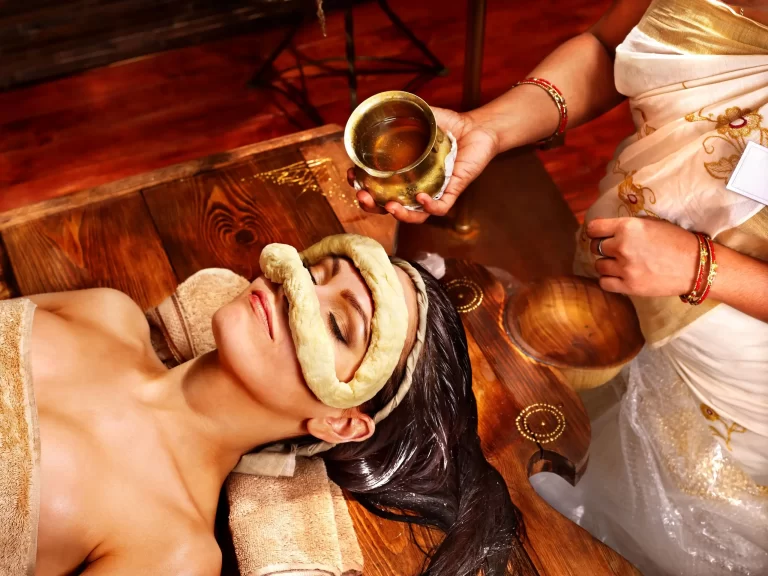
Netra Tarpana: The cornerstone therapy for eye rejuvenation, where the eyes are bathed in a pool of medicated ghee to deeply nourish the macula and retinal tissues.
Shirodhara & Shirovasti: Calming procedures that pour or retain medicated oil on the forehead to balance the nervous system and pacify Vata dosha.
Nasya: Administration of herbal nasal drops to clear the channels leading to the brain and eyes, ensuring optimal nutrient delivery.
Aschyotana & Anjanam: Application of specialized herbal eye drops and salves to cool Pitta and reduce inflammation.
Basti (Medicated Enema): A vital therapy to pacify Vata dosha, which is the primary driver of degeneration.
Personalized Internal Medicines: Rejuvenative herbal formulations to strengthen the retina from within.
Why Timely Intervention is Critical
For Wet AMD, it is especially important to begin treatment immediately to help manage the leakage and inflammation, thereby preventing irreversible scarring. Our therapies aim to support the retina’s health and create a stable ocular environment.
Your Path to Preserving Vision
A typical treatment program at Ananthadhri involves an in-depth consultation with Dr. Swetha to create a personalized plan. The intensive Panchakarma therapies often require a residential stay of 2-3 weeks. Follow-up courses are recommended to maintain the benefits and monitor progress.
Meet Our Specialist
The AMD Clinic at Ananthadhri is led by Dr. A. Swetha, MD (Ayu), a specialist in Ayurvedic Ophthalmology. Under her expert guidance, our dedicated team is committed to providing compassionate, evidence-based Ayurvedic care, offering a beacon of hope to those navigating the challenges of Macular Degeneration.
Frequently Asked Questions (FAQ`s)
Can Ayurveda cure Macular Degeneration?
While there is no known cure for AMD in any medical system, the primary goal of Ayurvedic treatment at Ananthadhri is to effectively manage the condition and halt its progression. Our approach focuses on stabilizing your current vision, preventing further damage to the macula, and in many cases, helping patients experience an improvement in visual clarity and a reduction in symptoms like distortion.
I have been diagnosed with the "wet" form. Is it too late for Ayurveda?
It is not too late. In fact, for Wet AMD, immediate intervention is critical. Our treatments are designed to help pacify the Pitta dosha responsible for the inflammation and leakage. By strengthening the retinal tissues and supporting the body’s healing mechanisms, we aim to help control the abnormal blood vessel activity, reduce edema, and prevent further vision loss. Ayurveda can be a valuable supportive therapy alongside your existing treatments.
How do Ayurvedic treatments like Netra Tarpana help the macula?
The macula requires intense nourishment to function optimally. Netra Tarpana bathes the eyes in medicated ghee and herbs that are specifically chosen for their rejuvenating properties. This process allows for direct, deep absorption of these nutrients into the ocular tissues, helping to strengthen the retinal pigment epithelium (RPE) and photoreceptors (rods and cones) that are affected by AMD.
What results can I realistically expect?
The most significant and realistic outcome is the stabilization of your vision to prevent further decline. Many of our patients report positive changes such as reduced blurriness, smaller blind spots, less distortion of straight lines, and improved tolerance to bright light. The extent of improvement varies based on the stage and type of AMD, but our primary commitment is to help you preserve your functional independence.
Are the herbal medicines safe to take with my current medications?
Your safety is our utmost priority. During your initial consultation, Dr. Swetha will conduct a thorough review of your current health status and all medications you are taking. Our internal herbal formulations are then prescribed with this complete picture in mind to ensure there are no contraindications, ensuring a safe and integrated approach to your care.