
Retinitis Pigmentosa
Ayurvedic Management of Retinitis Pigmentosa at Ananthadhri
A diagnosis of Retinitis Pigmentosa (RP) can feel overwhelming, but there is hope. At Ananthadhri, we specialize in a proactive Ayurvedic approach designed to slow the progression of RP, preserve existing vision, and enhance overall quality of life.
Understanding Retinitis Pigmentosa (RP)
Retinitis Pigmentosa is a group of inherited genetic disorders that cause progressive degeneration of the retina—the light-sensitive tissue at the back of the eye. The disease typically first affects the rod cells, responsible for night and peripheral vision, leading to initial symptoms like night blindness and tunnel vision. Over time, cone cells (responsible for central color vision) can also be affected, leading to further dimness of vision.
The Ayurvedic Perspective on RP
Ayurveda views RP as a condition involving a deep-seated imbalance that progresses through the bodily energies (doshas). Initially, Kapha dosha is vitiated, followed by Pitta, and ultimately Vata dosha, which governs movement and nervous system activity, leading to tissue degeneration.
While RP is genetic, Ayurveda firmly believes that by creating a healthy internal environment, we can positively influence how these genes express themselves. Our goal is to nourish and strengthen the retinal tissues, potentially slow degeneration, and help patients maintain their current vision for as long as possible.
Symptoms of Retinitis Pigmentosa
Night Blindness (Nyctalopia)
Progressive loss of peripheral vision, leading to “tunnel vision”
Dimming of overall vision
Difficulty with color perception as the disease advances
Floaters or flashes of light
The Ananthadhri Treatment Approach
Our treatment is focused on rejuvenation (Rasayana) and nourishment. We employ specialized Panchakarma therapies to deliver potent herbal medicines directly to the eyes and nervous system, aiming to:
Halt the progression of retinal degeneration.
Nourish and revitalize damaged retinal cells.
Stabilize vision and, in some cases, improve visual acuity and field.
Our Core Therapeutic Procedures Include:
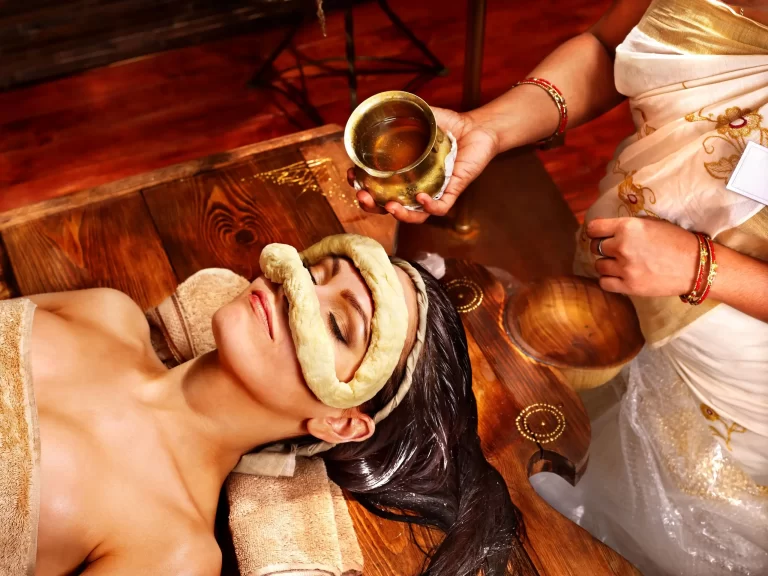
Netra Tarpana: A cornerstone therapy where the eyes are bathed in a pool of medicated ghee to deeply nourish the optic nerves and retinal tissues.
Shirodhara & Shirovasti: Calming procedures that pour or retain medicated oil on the forehead to balance the nervous system and pacify Vata dosha.
Nasya: Administration of herbal nasal drops to clear the channels leading to the brain and eyes.
Netra Dhara / Thakradhara: A gentle stream of medicated liquids or buttermilk over the eyelids to cool and soothe the eyes.
Basti (Medicated Enema): A vital therapy to pacify Vata dosha, which is the root cause of degeneration.
Aschyotana & Anjanam: Application of specialized herbal eye drops and salves.
Your Treatment Journey
A typical treatment program at Ananthadhri involves an initial in-depth consultation to understand your unique condition. The recommended Panchakarma therapies are performed under strict supervision. For optimal and lasting results, a course of treatment spanning 2-3 weeks, with recommended follow-up courses at 3-6 month intervals, is often advised to sustain the benefits.
Meet Our Specialist
The RP Clinic at Ananthadhri is led by Dr. A. Swetha, MD (Ayu), a specialist in Ayurvedic Ophthalmology. Under her expert guidance, our dedicated team is committed to providing compassionate, evidence-based Ayurvedic care, offering a beacon of hope to those navigating the challenges of Retinitis Pigmentosa.
Frequently Asked Questions (FAQ`s)
Can Ayurveda cure Retinitis Pigmentosa?
As a genetic condition, there is currently no known cure for RP in any medical system, including Ayurveda. However, the primary goal of Ayurvedic treatment at Ananthadhri is to proactively manage the disease. We focus on slowing down the degenerative process, preserving your existing vision for as long as possible, and improving your overall quality of life by strengthening the retinal tissues and managing symptoms.
I am already in my 40s with advanced RP. Is treatment still beneficial for me?
Yes, it can be. While early intervention is always ideal, our treatments are designed to nourish the ocular system and support remaining vision at any stage. We have seen cases where patients experience stabilization in their vision and a reduction in symptoms like dryness and discomfort, which is a significant benefit. We recommend a consultation with Dr. Swetha for a personalized assessment.
How do Ayurvedic treatments like Netra Tarpana help with a genetic disease?
Think of your genetic code as a blueprint, and your body’s internal environment as the construction site. While we cannot change the blueprint (genes), we can optimize the construction site. Therapies like Netra Tarpana deliver intense nourishment directly to the retina, creating a healthier cellular environment. This can help minimize the negative expression of the genes, potentially slowing the rate of degeneration.
What results can I realistically expect from the treatment?
The primary goal is to stabilize your current vision and halt further progression. Many of our patients report positive outcomes such as improved dark adaptation, reduced light sensitivity, a wider visual field, and enhanced clarity. The results vary from person to person based on the stage of the disease and individual response, but our aim is to help you maintain functional independence.
Are these treatments safe?
Absolutely. All procedures are non-invasive and have been practiced for thousands of years. They are performed by our highly trained therapists under the direct and careful supervision of Dr. Swetha, ensuring the highest standards of safety, hygiene, and personalized care throughout your stay at Ananthadhri.